
Electronic Shelf Label (ESL)
Electronic Shelf Label (ESL): Revolutionizing Retail Technology
What is an ESL ?
An Electronic Shelf Label (ESL), also known as a digital price tag or electronic shop display, is a modern tool for retailers. Retailers use these digital tags to display product pricing directly on the shelf. The system uses wireless communication networks to update prices, product details, and digital media automatically. Consequently, store managers can manage their entire inventory’s pricing from a single central hub.
Why Retailers are Switching to Digital Pricing
The primary purpose of an Electronic Display for shops is to provide accurate, real-time information to your customers. Traditional paper tags are often time-consuming and expensive to update. In contrast, ESL technology allows you to change prices instantly across multiple locations.
Using ESL ensures high price integrity. It significantly reduces discrepancies between the price shown on the shelf and the price at the Point of Sale (POS). Furthermore, it streamlines store operations by removing the need for manual labor.
Enhancing the Customer Experience
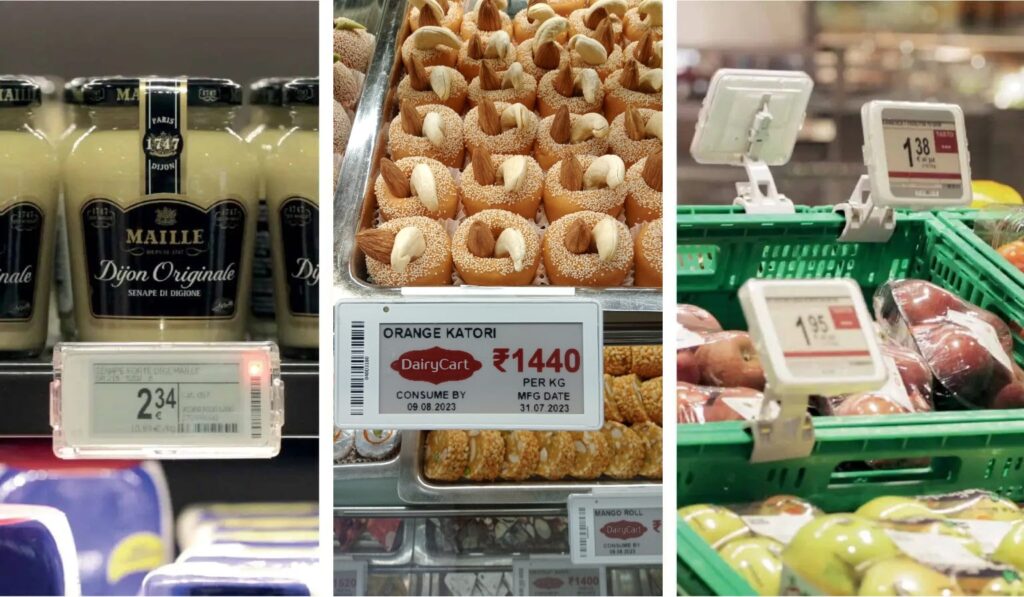
Modern ESLs do more than just show a price. They enhance the shopping experience by providing extra layers of information. For example, these digital tags can display:
QR Codes: Allowing customers to view detailed product reviews or specs.
Barcodes: Helping staff manage stock levels quickly.
Promotional Messages: Highlighting limited-time discount offers.
Moreover, these labels contribute to a sustainable retail environment. By eliminating paper tags, your business reduces waste and lowers its carbon footprint.

Electronic Shelf Label Work ?
How Does the ESL System Work?
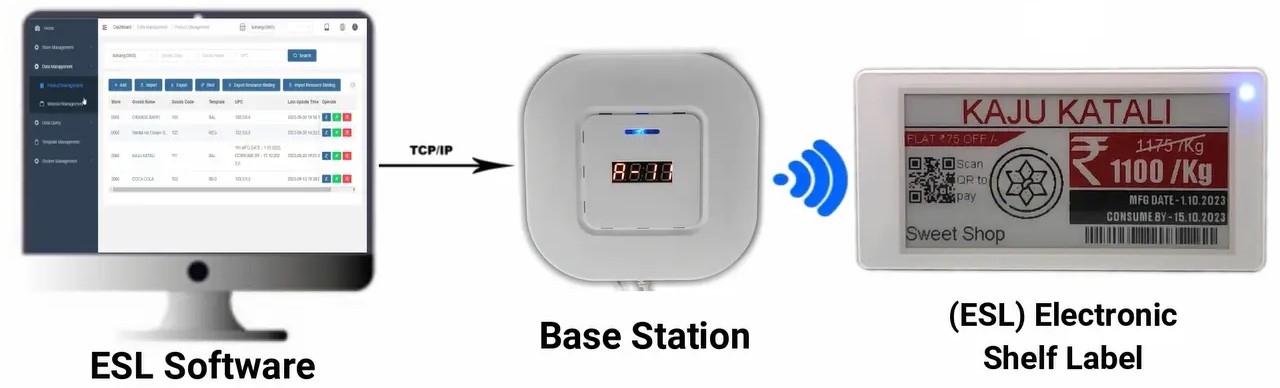
Electronic Shelf Labels (ESLs) utilize low-power wireless technologies to keep your pricing current. Typically, these systems use Radio Frequency (RF), Infrared (IR), or Near-Field Communication (NFC) to receive data from a central server.
Because each label has a unique ID, the system ensures the right price always reaches the right product. The communication process follows these four simple steps:
The 4-Step Update Process
Centralized Update: First, the retailer enters the new price or product details into the central server.
Wireless Transmission: Next, the server sends this updated information across the wireless network to the shelf edge.
Smart Targeting: Since every ESL has a unique identification code, the system accurately identifies and updates the correct label.
Instant Display: Finally, the ESL refreshes its digital screen to show the new price or promotional message to the customer.

ESL Base Station
What is an ESL Base Station?
An Electronic Shelf Label (ESL) Base Station is the most vital part of a modern retail system. Essentially, this device acts as the central hub for your entire store. It manages the communication between your main server and the digital labels on the shelves. While it works behind the scenes, it is the bridge that keeps your digital pricing ecosystem connected.
The Primary Role of the Base Station
The main goal of an ESL base station is to simplify how you manage data. It facilitates the instant transmission of price updates and product details from your central server to the shelf edge.
Consequently, this technology allows for real-time updates across your entire inventory. By using a base station, you ensure that your displayed data is always accurate and consistent. Furthermore, it removes the risk of human error during price changes, protecting your store’s price integrity.
ESL Server Software
Server Software is a digital system used in retail environments. This automates the process of managing and updating pricing information on product shelves. It is a key component of the Electronic Shelf Label system, which includes digital labels and the software that manages them.
Server Software provides a centralized system for managing product pricing and information in a retail environment. Software allows retailers to update pricing information in real-time, ensuring that the prices displayed on the shelves match those at the checkout. It also helps to reduce labor costs associated with manual price updates and reduces the risk of pricing errors.
Benefits of Using Electronic Shelf Labels
The Key Benefits of Using Electronic Shelf Labels
Switching to an Electronic Shelf Label (ESL) system offers several strategic advantages for modern retailers. Here is how this technology transforms your store operations:
1. Real-Time Pricing Updates
ESLs allow for instant price changes across your entire shop. This feature is particularly useful for price matching or running flash promotions. Consequently, you can implement dynamic pricing strategies immediately without waiting for staff to change physical tags.
2. Cost and Time Efficiency
Manual price updates are often slow and expensive. In contrast, ESLs eliminate the need for paper labels entirely. This transition saves your team hours of work and significantly reduces long-term labor costs.
3. Improved Price Accuracy
Maintaining price integrity is vital for customer trust. Because the system is automated, it reduces discrepancies between the shelf price and the Point of Sale (POS). Therefore, you can be confident that your customers always see the correct price.
4. Enhanced Customer Experience
Modern digital tags do more than just show a price. They can display additional product details, QR codes, or promotional messages. Furthermore, these features help shoppers make informed decisions, which greatly enhances their overall experience.
5. Environmental Sustainability
Finally, ESLs contribute to a more sustainable retail environment. By eliminating the need for thousands of paper tags every year, your business reduces waste and supports eco-friendly initiatives.